How Growing Delivery Businesses Make Their Dispatch Operations Run Like Clockwork
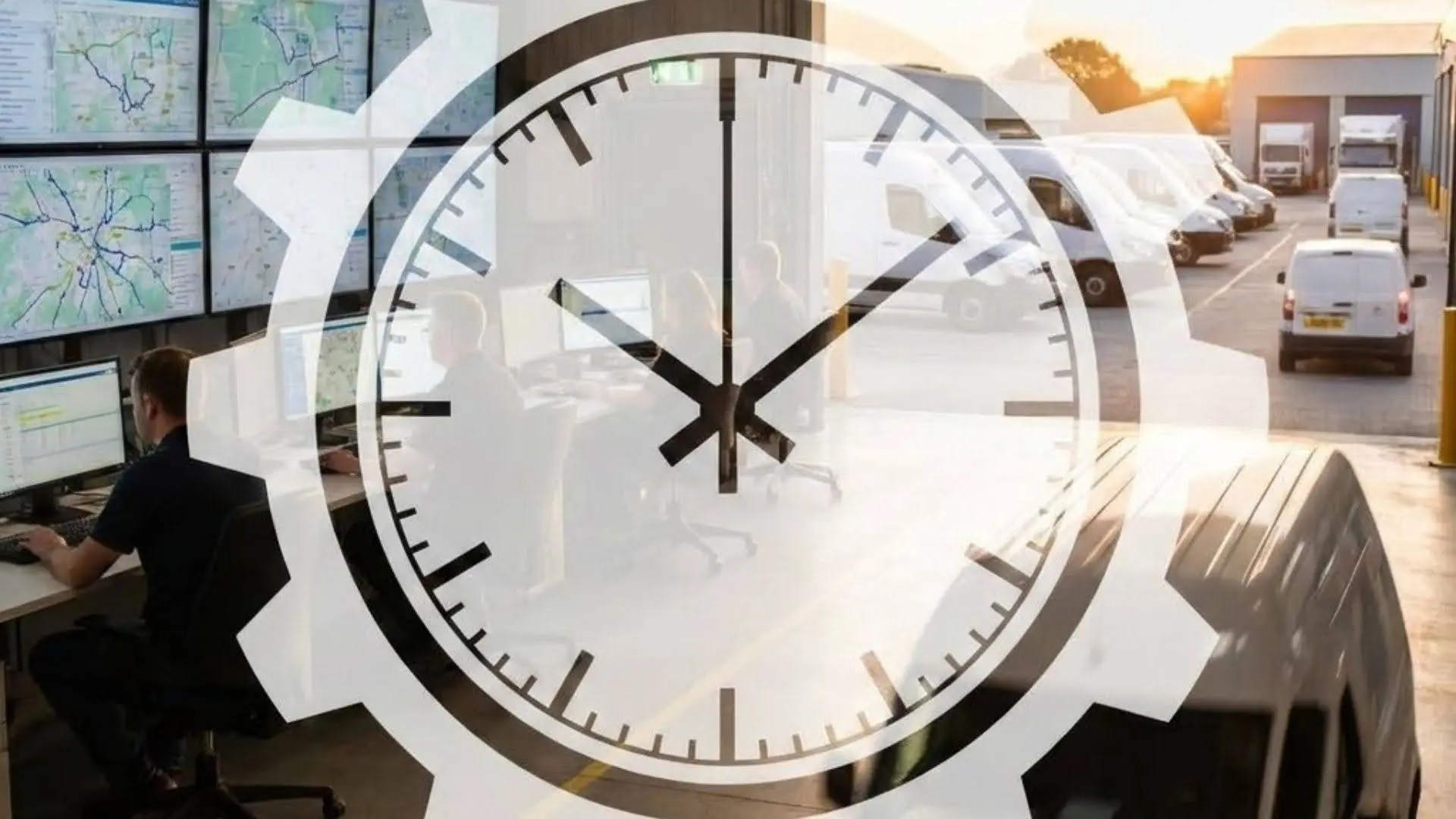
You began with a handful of drivers, a spreadsheet, and a phone that was constantly ringing. It kind of worked — until it didn't.
Now orders are piling up, customers are expecting their deliveries on a tighter schedule, and your dispatch team is spending way too much time putting out fires instead of actually planning.
Does that sound like a familiar situation?
Scaling up a delivery operation is exciting, but it throws every weakness in your process into sharp relief.
What once seemed manageable — manually assigning jobs, phoning drivers for updates, scratching down notes on a whiteboard — suddenly becomes a major bottleneck.
It's not the businesses with the largest fleets that end up succeeding, it's the ones that get their dispatch process sorted early on and can stay ahead of the chaos.
This guide takes you through exactly how growing delivery businesses create reliable, scalable dispatch workflows — from the physical layout of your operation to automated technology, data-driven decision-making and team protocols.
Why Getting Your Dispatch Sorted Is Essential for Supply Chain Growth
When delivery volumes start surging, trying to manage things manually really doesn't just slow things down — it breaks.
Mistakes multiply, drivers end up sitting around waiting for dispatchers to get their heads together, and before long customers start noticing the lack of consistency.
Throwing more bodies at a broken process just adds to the expenses without fixing the underlying problems.
Standardising things flips that on its head. Instead of every dispatcher doing things their own way in every location, you put in place repeatable processes that grow with you without requiring a proportional increase in staff.
Your team shifts from managing every single task to handling the occasional exceptions — the weird and wonderful situations where some human judgment is really needed.
The bottom line is significant:
- Dispatch times can be up to 30% faster through better synchronised processes, clear handoffs, and putting the right orders in the right sequence.
- Consistency across locations, which makes it a doddle to bring new staff on board and means service quality stays high as you expand into new areas.
- Lower operating costs through better use of your assets and making sure the right orders go to the right drivers on the right routes.
- Happy customers because reliable processes translate directly into reliable delivery times.
In reality, delivery standardisation through dispatch and planning software takes what's been holding you back and turns it into the driving force behind your success.
What's more, this works for both Australian networks and international shipping services.
Four Steps to Get Your Delivery Dispatch Process Sorted
Standardisation isn't something you can just flick a switch and have happen, it's a structured approach that impacts everything from the physical setup of your operation to your tech stack, communication channels, and how your team uses data.
Here's how growing delivery businesses tackle each of these layers.
1. Get Your Physical Layout and Operations in Order
Before you even think about the tech side of things, take a good hard look at the physical flow of your operation.
Are your dispatch zones clear as a bell? Do drivers know exactly where to go when they arrive? Is there a logical sequence from when you get the order to when the driver leaves the premises?
Having a uniform layout across all your locations gives you a sense of predictability even with Australia's largest delivery network.
When every site follows the same sorting sequences, handoff procedures, and staging areas, a driver or dispatcher can walk into any location and know exactly what's going on.
Things to consider include:
- Dedicated pickup zones where drivers know exactly where to go and products are ready for them as soon as they arrive — that saves time and reduces the chances of the wrong order ending up on the wrong vehicle.
- Standardised sorting sequences so items are in the right order before the driver gets there — that makes life easier for everyone involved.
- Clear handoff protocols — who confirms the order is done, who scans it out, and who flags any discrepancies.
For warehouse-based operations, this extends to picking, packing, labelling and load sequencing. Automation tools like conveyor systems and barcode scanning really help keep things running smoothly as volumes grow.
2. Adopt Automated Dispatching Delivery Solutions Technology
This is where the biggest step forward usually happens.
Moving from manual methods like phone calls, spreadsheets and gut-feel routing to automated dispatching solutions is the single most impactful thing a growing delivery business can do.
Automated systems take care of route optimisation, real-time tracking and job sequencing at a speed and consistency that no human dispatcher can match at scale.
They reduce errors, enable faster decisions and free your team up to focus on the stuff that really needs a human brain.
The essential tech bits include:
- Route optimisation algorithms that factor in real time traffic, delivery priorities, time windows and road closures to calculate the best routes possible — not just the shortest distance.
- A delivery management system (DMS) that acts as your command centre and sorts out order processing, packing, dispatching and driver assignment from a single platform.
- Integration with existing systems like your ERP, warehouse management system (WMS), transport management system (TMS), or CRM platforms — that means data flows smoothly without needing manual re-entry.
Platforms like Locate2u offer GPS tracking, AI-powered routing, electronic proof of delivery (ePoD) and in-app driver communication — all designed to scale with your volume rather than collapse under it.
3. Sort Out Real-Time Visibility and Communication
One of the biggest frustrations in a growing delivery operation is not knowing what's going on in the field. A customer calls up and wants to know where their order is. The dispatcher checks a spreadsheet last updated 45 minutes ago and the driver's phone just rings straight to voicemail and everyone starts guessing.
Real-time visibility sorts out the guesswork. When everyone has access to live tracking, accurate ETAs and instant updates, things just run a lot smoother — from dispatchers and drivers right on down to customers.
Key elements to look for include:
- Live GPS tracking so dispatchers can see exactly where every driver is at any given time and make informed decisions on the fly.
- Electronic proof of delivery (ePoD) — a photo, signature, and timestamp all captured in one go, to save on disputes and all that hassle.
- Proactive customer notifications with live ETAs to cut down on those "where's my order?" calls and build trust with customers.
- Unified communication channels so drivers can flag issues through the app and not have to call the office, keeping dispatchers focused and giving a clear trail of what happened.
This level of transparency does more than just improve efficiency — it changes the customer experience completely. When customers can see their delivery arriving in real time, their satisfaction goes up and complaints go down.
4. Leverage Data for Planning and Continuous Optimisation
Sticking to a standard process generates consistent data, and that data becomes your most valuable planning tool. Instead of just reacting to problems as they come up, you can start anticipating them.
The KPIs worth keeping an eye on include:
- On-time delivery rate — it's the reliability of your business.
- Average dispatch-to-delivery time — it shows how quickly your team is able to get jobs from assignment to completion.
- Fuel consumption and idle time — these are direct tells of how efficient your routes are and how drivers are behaving.
- First-attempt delivery success rate — failed deliveries cost money — understanding why they happen is a big help in keeping them down.
- Cost per delivery — this is the bottom line metric that ties everything together.
Tools that use AI can automate a lot of this analysis for you, pulling out patterns and suggesting changes that would take a human team hours to figure out. The aim is to free up your dispatchers to do the jobs that require a bit of judgement and experience.
Manual Dispatch vs. Standardised Automated Dispatch
If you're still unsure about whether standardising is worth the investment, here's a comparison that might help make up your mind:
- Error rate: Manual dispatch is error-prone and labour-intensive. Automated dispatch reduces errors and scales really well.
- Decision speed: Manual processes are slow and reactive. Standardised systems allow you to optimise in real time — cutting down dispatch times by up to 30%.
- Consistency: Without standardising, processes are all over the place — from one site to the next and from one shift to the next. With uniform workflows, training is easier and performance is more predictable.
- Visibility: Manual operations just don't offer much insight into field activity. Automated systems give you full tracking, live ETAs and instant proof of delivery.
- Scalability: Adding volume to a manual process means adding headcount. Adding volume to a standardised process just means your system can handle it.
Common Challenges Courier Services Face
No standardisation effort is without its bumps along the way. Here are the obstacles that trip up most growing delivery businesses, and how to navigate them:
Different Data in Different Systems
When your order platform says one thing and your dispatch tool says another, trust in your data is bound to go down fast. The solution is to prioritise systems that play nice with each other and share the same facts.
If you can't get the systems fully integrated right away, then choose one to be the trusted record and build your processes around that.
When the Team Gets Swamped with Deliveries
You get a sudden surge in demand and next thing you know your team is struggling to keep up. Automation handles these situations without requiring you to rush out and hire more people.
When your system can reassign drivers and re-route in real time, a spike in orders is a challenge that your technology solves, not your team.
Getting the Team to Buy In
Dispatchers who've been doing things manually for years may be resistant to change.
The best way to handle this is to involve them right from the start — get them involved in the selection and testing process. If they see that automation can take care of the tedious stuff and frees them up to do higher-value work, they're more likely to be on board.
Scaling Across Multiple Locations and Pickup Services
What works in one depot is not always going to work in another one.
The key is to look for a system that's flexible — choose platforms that allow you to configure things at a local level within a standardised framework. And plan for scalability from the start — it's a lot cheaper to get it right at the outset than to try and retro-fit a system that was designed for 50 deliveries a day to handle 500.
The Bottom Line for Cost Effective Delivery Services
Standardising your dispatch processes is not about removing the human element from your operation — it's about giving your people the structure and tools they need to do their best work — even as volumes double and triple.
The delivery businesses that make it in the long run all share one thing in common — they treat dispatch as a strategic capability, not just an admin task.
They invest in standardised workflows, automated tech and real-time visibility because they know that consistency at scale is the key to turning a growing business into a market leader.
Ready to make your dispatch operations run like clockwork? Request access to see how Locate2u can help you scale with confidence.
Related Articles
Logistics Partnerships: Stepping Up to Succeed at Last-Mile Delivery
There is a last mile delivery process issue that most in logistics and delivery understand. It's when a customer places an order, everything is humming along just fine through the warehouse, and then it hits that final stretch...
Training Your Logistics Team for High-Speed Fulfilment
If you're running a logistics operation in 2026, you already know the drill — delivery windows are tighter than ever, orders are piling up and customers just expect to get what they want, when they want it — no questions asked...
Closing the Gap Between Warehouse Operations and Last-Mile Delivery
If you've ever watched a perfectly packed order sit on a loading dock while a delivery van pulls away half-empty, you already know the problem. Warehouses and last-mile delivery teams regularly operate in entirely different worlds...