Training Your Logistics Team for High-Speed Fulfilment
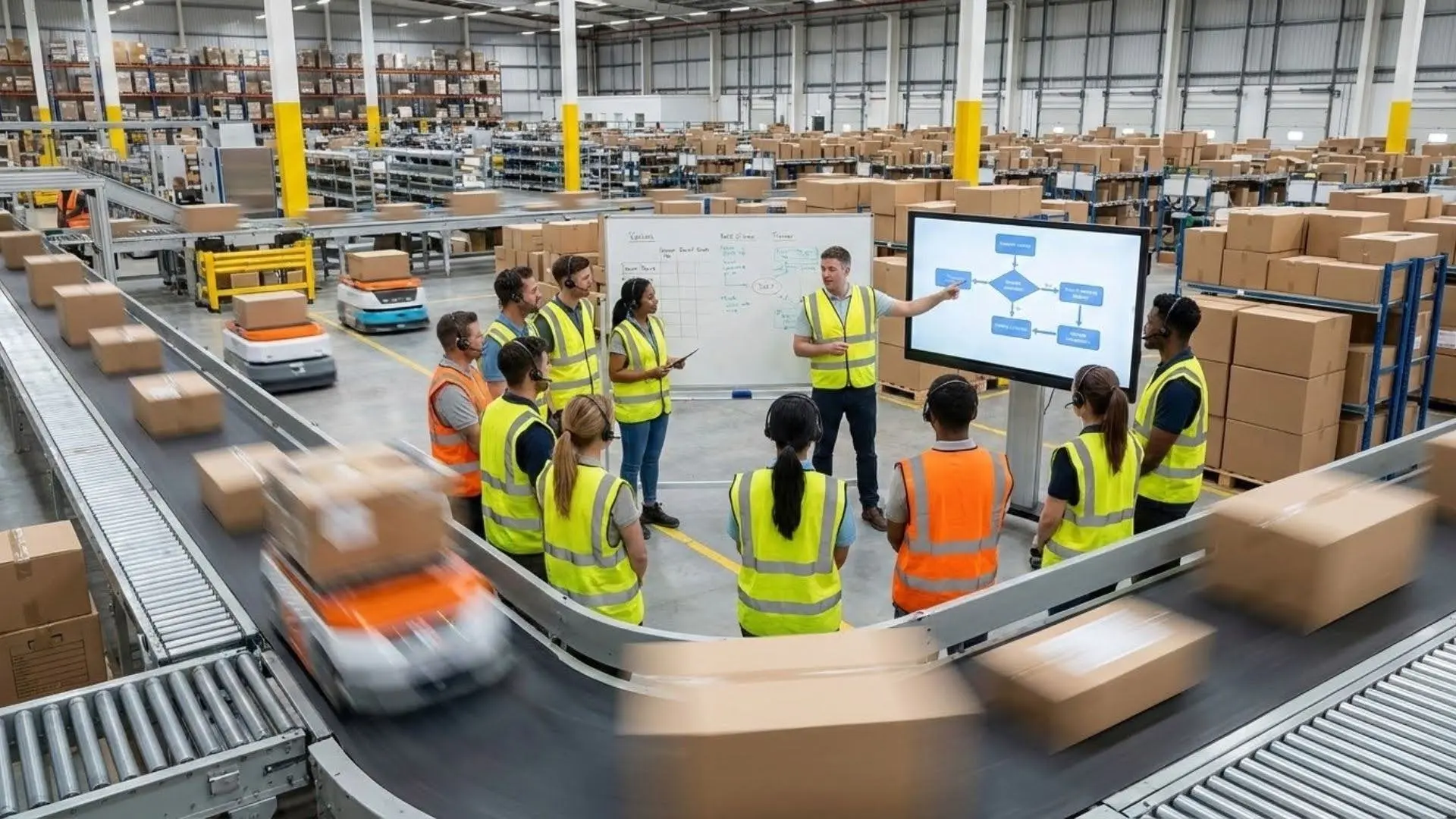
If you're running a logistics operation in 2026, you already know the drill: delivery windows are tighter than ever, orders are piling up and customers just expect to get what they want, when they want it, no questions asked.
The natural reaction is to throw the latest tech at the problem and, don't get me wrong, the right tools do matter, they're a no-brainer.
But, if you want to know the secret to fast and reliable fulfilment, it's training that sets the leading performers apart from the rest.
Let's break down what makes effective logistics training tick and how you can build a training program that actually scales with your operation.
Why Training Is a Game Changer for Supply Chain Fulfilment Speed
It may seem obvious, but let's say it anyway: standardised processes make a massive difference when it comes to picking, packing and dock scheduling.
That means shorter cycle times, more orders getting picked and packed on the first try, and the ability to consistently hit tight delivery windows without burning your team out in the process.
Training and a customer centric approach also drives consistency.
When every team member is following the same established standards, you see real improvements in lines per hour and first pass yields.
And the numbers don't lie. Faster throughput, fewer errors and on-time deliveries all add up to the kind of customer trust that turns into repeat business.
Put it this way. You can spend a pretty penny on the best route optimisation software and real-time tracking tools out there, but if the warehouse side of your operation is slow or error-prone, those downstream tools are only going to do so much.
Training is where speed actually begins.
Training Areas for High-Speed Logistics Operations
Not all training is created equal when it comes to logistics. For teams focused on speedy fulfillment, there are four key areas that deserve the most attention.
Receiving and Put-Away
Speed starts at the dock, not at the pick line. If your receiving process is a bit of a mess, everything downstream starts to suffer. Your team should be trained on:
- ASN (Advance Shipping Notice) verification so inbound shipments can be validated quickly and any discrepancies can be flagged before they become a problem
- Dock scheduling so you can prevent bottlenecks and keep the trailers rolling
- Intelligent slotting using RF scanners and cross-dock flows to reduce the time it takes for stock to get onto the shelf
- Staging discipline to keep the stockroom tidy and ensure pickers aren't left waiting for inventory
When your receiving team is on top of things, inventory gets onto the shelf faster and your pickers aren't stuck waiting for stock that should have been ready hours ago.
Picking and Packing
This is where the pressure is on to get orders out the door fast. Poor training can cost you dearly in lost revenue and wasted labour hours. Your team should be confident with:
- Batch, wave, and zone picking strategies and when to use each one, based on the type of orders they're working with
- Pick-to-light systems and voice-guided picking to boost the number of units picked per hour while keeping accuracy levels high
- Packaging standards and cartonisation rules to cut down on rework and keep carrier costs under control
A picker who understands the strategy behind it, not just how to do it, will make better decisions when things don't go according to plan, and in a high-volume warehouse, things don't usually go according to plan.
Shipping and Carrier Management Solutions
The final handoff from your warehouse to the carrier can be a common source of delays and chargebacks. Train your shipping team on:
- Load sequencing to make the most of every trailer and support the delivery route
- Carrier compliance and labelling standards that tie in with your WMS or TMS
- Transportation mode selection that balances speed, cost and resilience for different types of shipments
When your shipping team is clued up on carrier requirements, you reduce the number of chargebacks and improve your on-time shipping rates. That's money saved and customers kept happy.
System Proficiency and Operational Efficiency
Your team can only get as fast as their comfort level with the tools they use every day.
Familiarity with your WMS, fulfillment software, driver app and any route optimisation platform is crucial for accurate tracking and order processing.
This isn't a one-off exercise either, regular training on any software updates and new features will keep your team productive as your technology stack evolves.
When a new tool rolls out and nobody's been properly trained on it, adoption stalls and you're left with expensive software that nobody actually uses.
Building a Safety-First Culture Without Sacrificing Freight Speed
Here's the tension that every warehouse manager faces: the push for speed can create pressure to cut corners on safety.
But high speed and strong safety aren't opposites. In fact, the safest operations tend to be the fastest ones, because injuries and incidents are breakers of throughput.
Implement safety-focused training that covers:
- Powered industrial truck operation with certification and refresher courses
- Racking loads and weight distribution to prevent stockpiling collapses
- Hazardous materials handling where applicable
- Personal protective equipment (PPE) standards and compliance
Virtual reality simulations and on-site drills give your team the chance to get the hang of things safely before they're in the thick of it in live operations. This approach cuts down on near miss incidents while still keeping productivity high, even when things get hectic and people feel the urge to rush.
Communication and Hand-Offs That Really Work
Logistics training doesn't often cover one crucial topic: most delays don't come from broken systems but from handoffs between teams going wrong.
An order for delivery chugs along through lots of different teams. Receiving passes it to put away. Put away then hands it to the picking team. Picking hands it over to packing, packing to shipping and at each turn somebody has to get the information right or it gets lost or mixed up or just plain missing.
Getting clear on who's in charge and keeping everyone on the same page stops delays that are hard to track down. If you want to see results, train your team on:
- Keeping the right people in the loop about when and what is coming
- How to handle exceptions: damaged goods, stuff that's not where it's supposed to be and all that jazz
- Who to call when things go wrong and making sure the right person gets a message ASAP rather than it getting lost in the void
When things run smoothly between teams, the whole operation hums along. That's a pretty high return on a bit of training.
Scaling Your Training to Fit Your Business and Inventory Levels
If you've got teams working different shifts or warehouses spread out, you've got a huge problem on your hands: getting everyone on the same page.
What works for one team in the morning might not play out so well at night at a different site.
So what's the answer? Flexible training programs that can happen in person or remotely, and that fit into your work schedule. Here are a few ideas that have worked:
- Training platforms that fit on a mobile phone so deskless workers can get the training they need on the warehouse floor or in the van
- Dashboards that show managers how everyone is doing on the fly and let you know if the training is actually working
- Training content that can be easily updated so you don't have to rebuild your whole program from scratch just because the rules changed
The goal is to make training accessible and, most importantly, trackable. If you can't see if someone got their training done, and even more importantly, whether it actually changed their performance, you're flying blind.
Training's an Ongoing Process, Not a One-Time Thing
The biggest mistake logistics teams make with training is treating it like it's only something you do to get new employees up to speed and never again.
Reality check: your processes change, your systems get upgraded and your team turns over, your training needs to keep up.
Companies that put a priority on ongoing training consistently see fewer delays, better team coordination and happier customers. It's not a coincidence.
When people feel confident in their skills and know the systems inside and out, they make better decisions faster. And in high-speed logistics, that is your whole game.
By giving your team both the technical skills and the knowledge they need to do their jobs, you create a foundation for speed that becomes a genuine competitive advantage, not just some pie in the sky goal.
Ready to give your logistics team the tools to match their training? Request access to see how Locate2u can support high-speed fulfilment operations.
Frequently Asked Questions
What's the most important thing to teach logistics teams for faster delivery?
The area that's got the biggest impact on delivery speed is usually picking and packing. Training your team on stuff like batch picking, wave picking and how to use tools like pick-to-light and voice-guided systems will rocket units processed per hour while keeping the errors to a minimum.
How often should you update your logistics training?
Minimum, you should be reviewing and updating the training whenever there's a process change, a new system is introduced or you're seeing a drop in performance. A lot of top operations do quarterly check-ins and update training modules at least once a year to keep on top of the latest best practices.
Can you really cut down delays with training and without a logistics supervisor?
Yeah you can. A lot of delays come from stuff that can be avoided like miscommunication between teams, wrong labelling or people not knowing the systems. Targeted training in those areas will be a big help in cutting down errors and bottlenecks that hold up deliveries.
How do you train teams across multiple locations?
Mobile training platforms and remote delivery options let you roll out training that everyone can do wherever they are, whether that's on the warehouse floor or in a delivery van. And real time tracking dashboards help managers keep an eye on progress and make sure every location is hitting the same marks.
Related Articles
Logistics Partnerships: Stepping Up to Succeed at Last-Mile Delivery
There is a last mile delivery process issue that most in logistics and delivery understand. It's when a customer places an order, everything is humming along just fine through the warehouse, and then it hits that final stretch...

Closing the Gap Between Warehouse Operations and Last-Mile Delivery
If you've ever watched a perfectly packed order sit on a loading dock while a delivery van pulls away half-empty, you already know the problem. Warehouses and last-mile delivery teams regularly operate in entirely different worlds...