Delivery Optimization Software for Canadian Courier and Last-Mile Fleets
Drafted with AI assistance, edited and fact-checked by Sean Flannery. See our editorial policy.
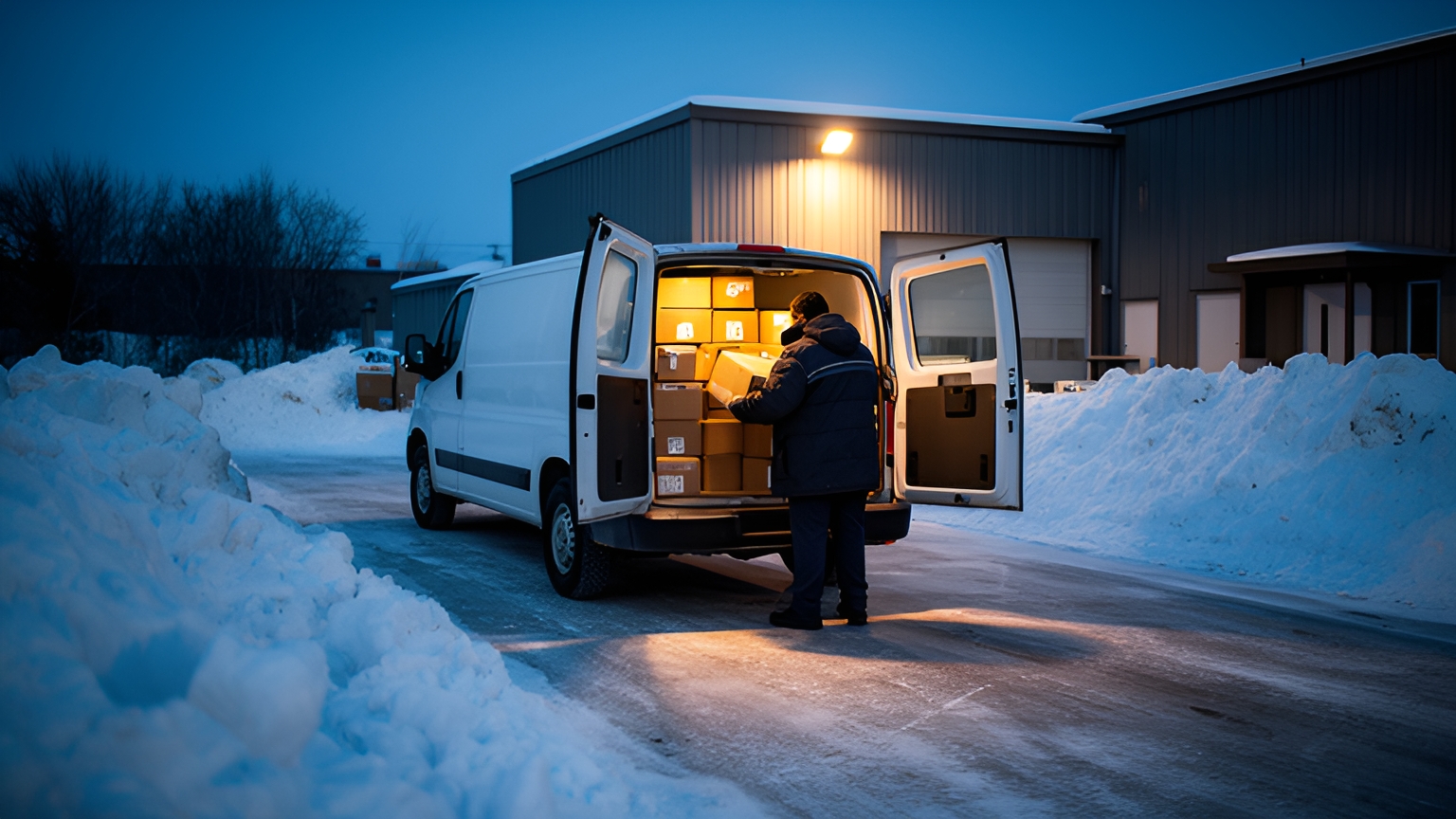
Delivery optimization software sequences stops, matches orders to vehicles and delivery windows, and re-plans the day when new orders arrive. For Canadian courier and last-mile fleets working across dense downtowns, spreading suburbs and severe winters, it builds routes around realistic stop times, vehicle range and weather buffers, then adjusts them as conditions change.
A route that works on a dry July afternoon in Calgary can run long on a January morning in Montréal. Snowbanks narrow the streets, and tower deliveries take longer at the concierge desk.
Good planning accounts for that difference before the van leaves the yard. It keeps accounting for it as the day changes.
What delivery optimization software does for a small Canadian courier fleet
At its simplest, the software turns the day's orders into a route for each driver.
You give it addresses, delivery windows, the vehicles on shift and each driver's start and finish times. It returns a stop sequence that respects those limits and keeps kilometres and drive time down.
For a small fleet, much of the value comes after the morning plan is built. When a late-morning order arrives, a good optimizer fits it into a route already on the road, so nobody starts again from a blank map.
Innovation, Science and Economic Development Canada's industry statistics, drawn from Statistics Canada financial performance data, count 30,071 small and medium-sized courier and messenger businesses for 2024. For an operator of that scale, the useful test is simple: does the tool hand the dispatcher back time every morning?
Locate2u brings route optimization, dispatch planning, live tracking, a driver app and proof of delivery together in one platform.
SuperPharmacy's case study reports that the Australian online pharmacy's delivery team was spending up to one hour every day manually planning routes for prescription deliveries. If an urgent prescription came in during the day, or a delivery needed rescheduling, the whole route had to be regenerated from scratch.
With customers increasingly expecting same-day delivery for their prescriptions, the manual process was becoming a bottleneck for growth.
The team implemented Locate2u's route optimization software to automate daily planning. In this one Australian business's experience, what once took an hour of manual work now takes just 10 minutes, with routes generated automatically from delivery locations, time windows and driver availability.
New prescriptions can be slotted into existing routes on the fly without disrupting other deliveries. That flexibility enabled SuperPharmacy to offer same-day prescription delivery as a core service.
In the team's words: "Before Locate2u, we had to generate new routes if we wanted to change anything. Now we can adjust the day's deliveries on the fly."
To see where your own fleet stands, time the morning planning session for a week. Note every time the plan is rebuilt by hand after drivers leave.
How rising fuel and labour costs make every planned kilometre count
Cost pressure on the final leg shows up clearly in national figures. Statistics Canada reports that couriers charged 16.9% more, and local messengers and local delivery firms 5.4% more, in April 2026 than a year earlier.
If you price your own delivery service, it is a good moment to check what each route actually costs to run.
The same analysis shows where businesses expect the pressure to come from. Energy was the input cost most commonly cited as a likely obstacle over the next three months by transportation and warehousing businesses, at 65.8%, with labour at 43.1%, according to Statistics Canada.
Those are the two costs a route plan influences most directly. Kilometres use fuel. Hours on the road are paid hours.
So the planning stage is where savings start. A kilometre removed before dispatch never has to be driven, and time removed from a shift can go to extra stops or an on-time finish.
Wages give the time side a clear value. Statistics Canada reports that the average offered hourly wage for full-time transport truck drivers reached a record C$30.20 in the first quarter of 2026, the fourth straight quarterly increase.
To put a value on the time optimization saves, take the minutes it removes from each driver's day, value them at that base offered full-time wage, and multiply by the days your fleet works in a year. Any fuel saved on the shorter route comes on top.
Use your own wage rates, shift patterns and the time saving you measure in a trial. The exercise tells you which two numbers to watch: planned kilometres and planned finish time.
For a closer look at where the time comes from, see how route optimization software saves hours across planning and driving.
How realistic stop times keep downtown towers and outer-suburb runs on schedule
Statistics Canada's 2021 Census release found that 73.7% of Canadians lived in one of the country's large urban centres, and that urban spread was speeding up in the suburbs farthest from downtown.
That mix means one van can spend its morning in a dense core and its afternoon on long suburban stretches. A single average stop time cannot describe both halves of that day.
Downtown, the drive between stops is short and the stop itself is long. Finding the loading area, waiting for an elevator and checking in at the concierge desk all happen before the parcel changes hands.
In the outer suburbs it flips. Handovers at the door are quick, and the kilometres between them add up.
MIT's Center for Transportation and Logistics reports that delivery vehicles spend 90% of the time parked or idling. Whatever the share is on your own routes, time spent stopped deserves as much attention in planning as time spent driving.
Start by setting service time by stop type. A house, an apartment tower, a loading dock and an outer-suburb driveway each get their own estimate.
Group deliveries to the same building into a single stop. The optimizer then plans one parking spot and one trip inside, rather than several.
Then check the estimates against real days. Locate2u's proof of delivery captures photos, signatures and timestamps at each stop, which gives your team a clear record of when every delivery was completed.
After a couple of weeks, compare those timestamps with the planned times. Adjust the stop types that run long, and the next plan gets more accurate.
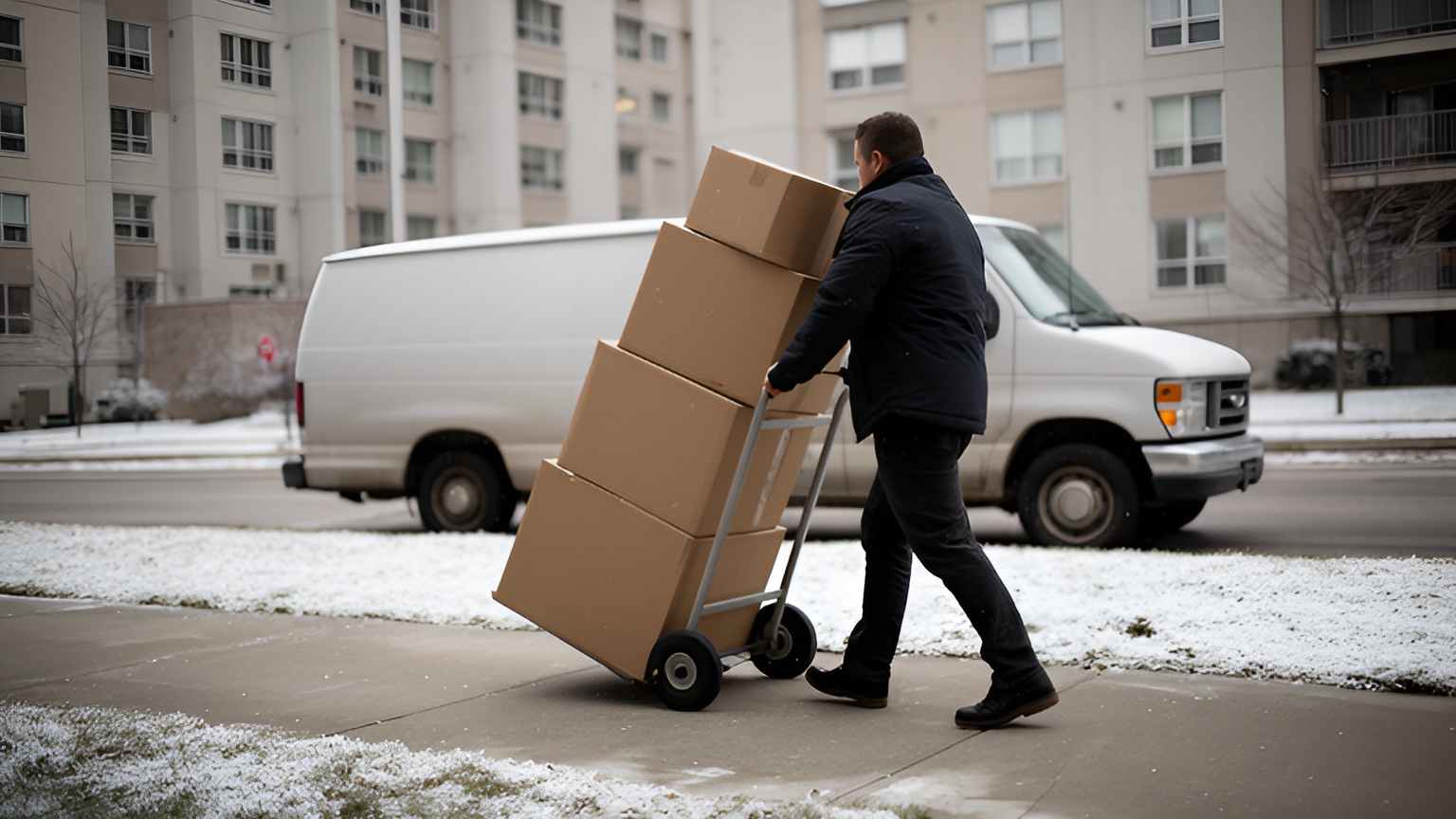
How winter-ready planning builds time and range buffers into each route
Environment and Climate Change Canada puts it plainly: "Canada has one of the most severe winter climates of any country in the world."
For dispatchers, that means the summer version of a route is rarely the one to send out in January.
Distance adds to the challenge. Transport Canada notes that the country's vast, sparsely populated territory and extreme weather conditions can make the efficient movement of goods challenging. A long inter-city leg leaves less room to recover from a slow start.
Software cannot forecast a blizzard. What it can do is plan for winter honestly, then re-plan quickly when conditions change.
Begin with travel times. On snow days, plan with slower drive estimates so the ETAs customers see stay realistic, and check during evaluation how easily that change can be made for a single day.
Next, add a time buffer to each route, sized from your own winter records. A route that finishes early is easy to top up with an extra stop. A route that runs into the evening is much harder to bring back on schedule.
If you run electric vans, keep a range reserve. Plan each route to finish with charge to spare for detours and slow traffic, and give the longest suburban or inter-city runs to the vehicles with the most range in hand.
When a road closes or a storm moves in, check your provincial road-conditions service first. Then re-optimize the remaining stops from each van's current position, not from the depot.
How mid-day re-optimization absorbs new orders through the December peak
December brings busy order books and short winter days at the same time. On a seasonally adjusted basis, Statistics Canada reports retail e-commerce sales of C$4.3 billion in December 2025, accounting for 6.1% of total retail trade, compared with 5.8% in November.
A growing share of retail moving online in the busiest month means more deliveries to plan just as daylight shortens. The morning plan will rarely survive the day unchanged, so mid-day re-optimization is the capability to test hardest before peak.
A few habits keep re-planning calm:
- Set order cut-offs per run. Orders before the cut-off join today's routes, and later ones roll to the next run.
- Re-optimize only what has not started. Stops already under way stay put, so drivers keep a steady sequence.
- Protect promised windows. Treat committed delivery windows as fixed and let the optimizer move everything else.
- Send fresh ETAs. When a route changes, customers should see the new arrival time, in French or English where they expect it.
Locate2u's dispatch planning lets the team slot new orders into routes already on the road without disrupting other deliveries.
Its real-time tracking gives dispatchers a live view of every vehicle, so a late order can go to the van with room to take it. Customers can receive a live tracking link and know when to expect their delivery without phoning the depot.
Then rehearse before December arrives. Take your busiest day from last year's peak, load the orders into a test plan and add late orders through the morning to see how the routes respond.
How optimized routes help your current drivers finish their days with confidence
Transport Canada reports that the trucking sector is already experiencing a shortage of over 20,000 drivers. When experienced drivers are hard to find, giving the team you have a well-planned day is a practical place to start.
A realistic route is a confident route. When stop times fit the building and the finish time fits the shift, drivers can plan their own day too.
With the Locate2u driver app, each driver carries the day's route on their phone and captures proof of delivery at the door.
Put access details on the stop itself: buzzer codes, dock instructions, where to leave a parcel. The knowledge then travels with the route.
Share the load fairly by rotating the long suburban and inter-city runs, and review planned finish times across the team, not just total kilometres.
And ask drivers which buildings take longest. Their answers make the next round of stop-time estimates better.
How to test optimized routes on your own deliveries before you decide
The clearest way to judge delivery optimization software is to run it on your own orders, your own addresses and your own winter.
Pick one ordinary week and one busier week. Clean the data first: full addresses with postal codes, delivery windows, vehicle capacities, shift times and a service time for each stop type.
Run the optimized plan alongside your current one. Dispatch from the plan you trust today, record what the optimized version would have done, then compare the two on the measures below.
| What to check | How to test it | What good looks like |
|---|---|---|
| Planned kilometres | Run the same week of orders through both plans | Fewer kilometres for the same stops and windows |
| Finish times | Compare each driver's planned end of shift | Routes that end within shift times, buffers included |
| Stop service times | Set times by stop type, then compare with proof of delivery timestamps | Plans that match what happens at towers, docks and doors |
| Mid-day changes | Add late orders to a live test day | New stops slot in without moving promised windows |
| Winter settings | Re-plan a snowy day from your records with slower drive estimates | Routes that still fit the shift with a buffer to spare |
| Driver app | Ask a few drivers to run a test shift on it | Drivers who find the route easy to follow |
| Customer messages | Request sample tracking messages in English and French | Language set per customer, not per account |
When the trial is done, move one depot or one shift across first. Widen the rollout once drivers are comfortable with the app and dispatch trusts the plan.
To see your own deliveries planned this way, or to talk through what the platform would cost for your fleet, book a call with the Locate2u team.
Frequently asked questions
How many vehicles do you need before delivery optimization software is worth it?
There is no fixed fleet size; the better test is how long your dispatcher spends building routes each morning and how often the plan is rebuilt by hand once drivers are out. If either happens daily, run one week of your real orders through an optimizer and compare the planned kilometres and finish times with your current plan.
What data should you have ready before importing your first routes?
Prepare clean addresses with postal codes, each customer's delivery window, vehicle capacities, driver shift start and end times, and an estimated service time for each stop type, such as house, apartment tower or loading dock. Clean inputs matter more than any setting, because the optimizer can only sequence the constraints it is given.
Can customer notifications go out in French as well as English?
Ask this directly during evaluation, because bilingual service expectations vary by province and customer base. Request a sample tracking message and tracking page in both languages, and check that the language can be set per customer rather than per account.
How should you switch from manual planning without disrupting deliveries?
Run the optimized plan alongside your current plan for one ordinary week and one busier week, dispatching from the manual plan while recording what the optimized plan would have done. Move one depot or one shift across first, then widen the rollout once drivers are comfortable with the driver app.
Better routes in Canada come from steady habits: clean inputs, stop times that suit each building, winter buffers and a plan that adapts as orders arrive. Start with one week of your own deliveries and see how Locate2u's route optimization sequences them.
